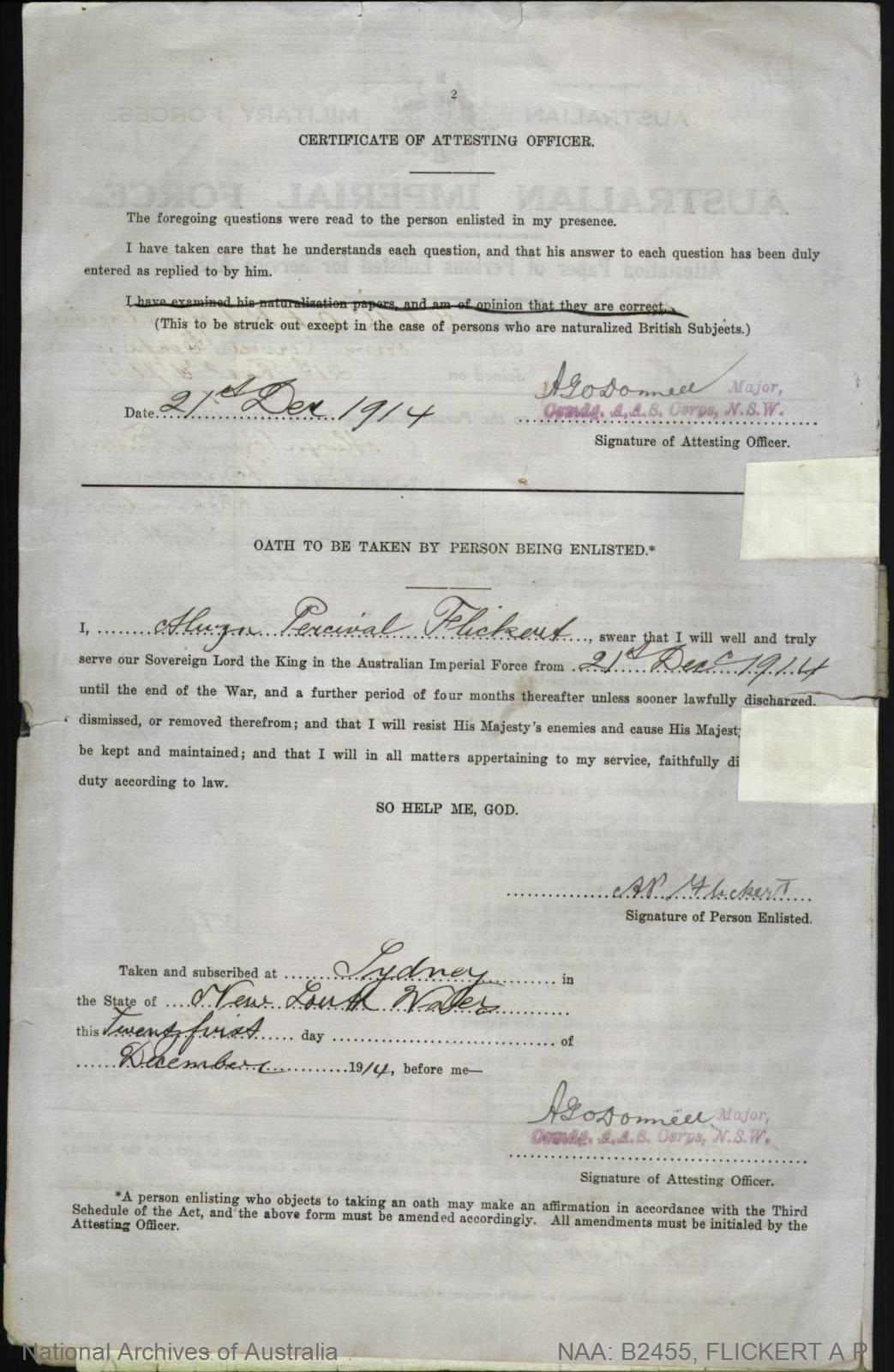
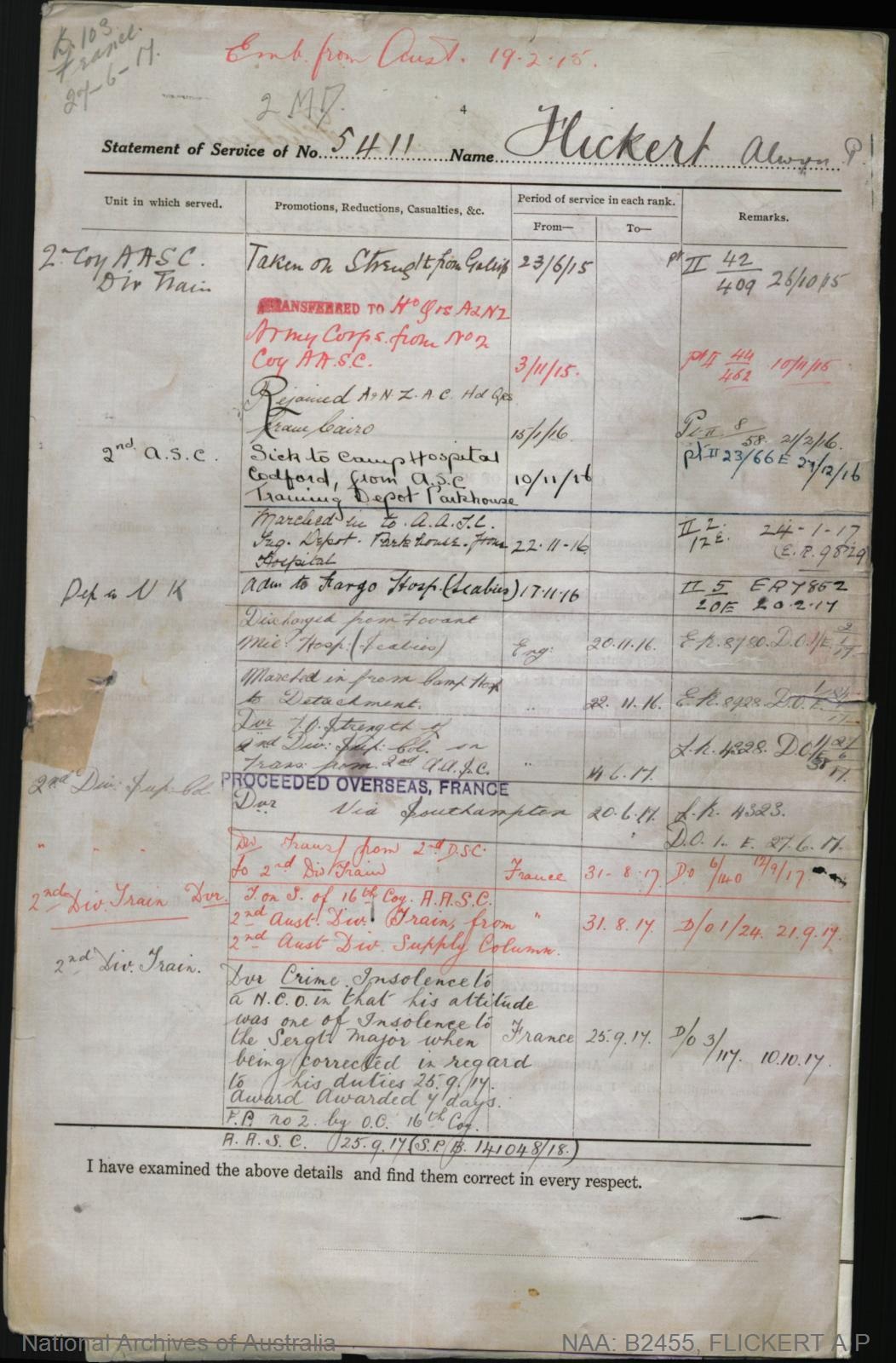
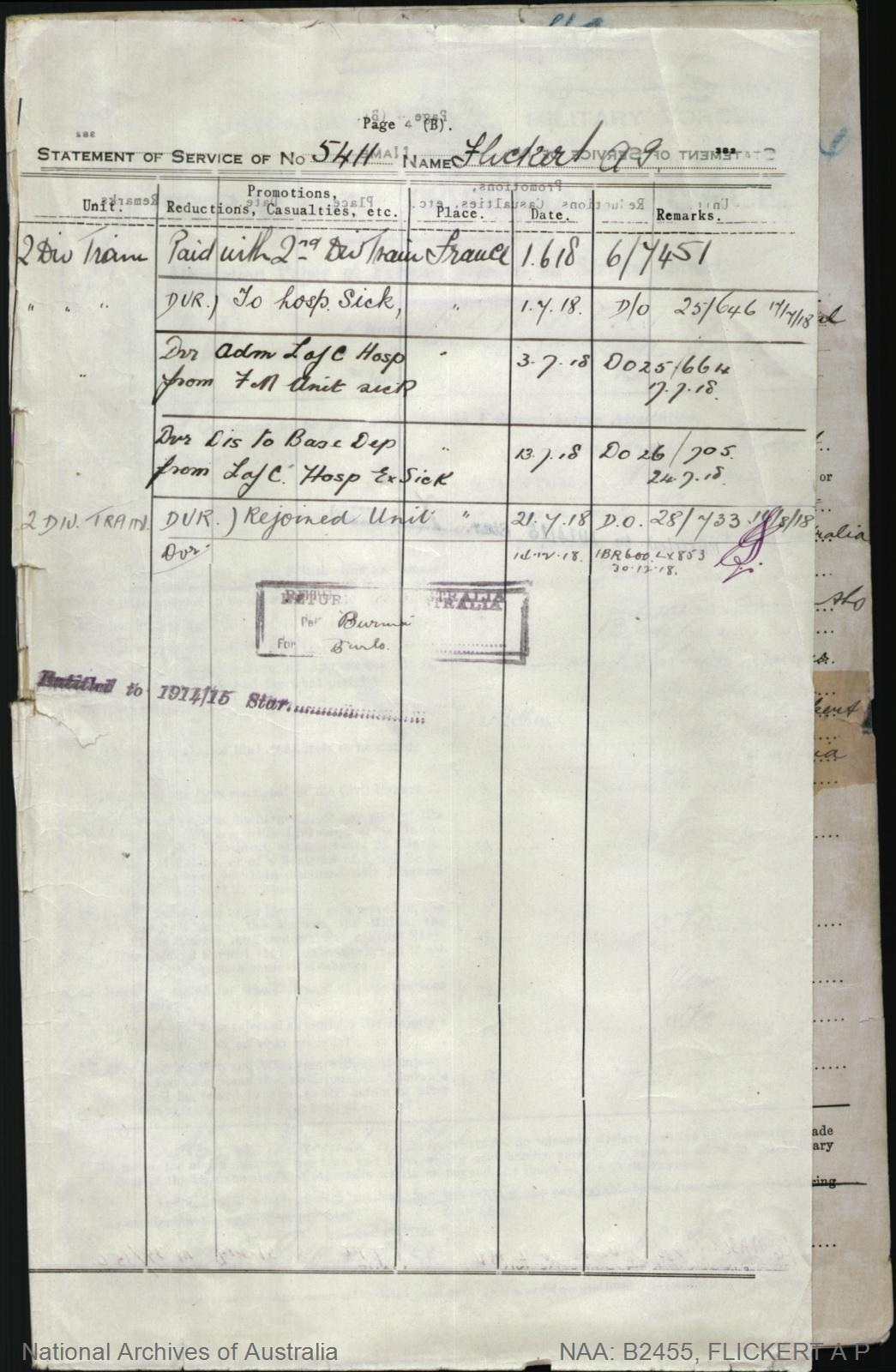
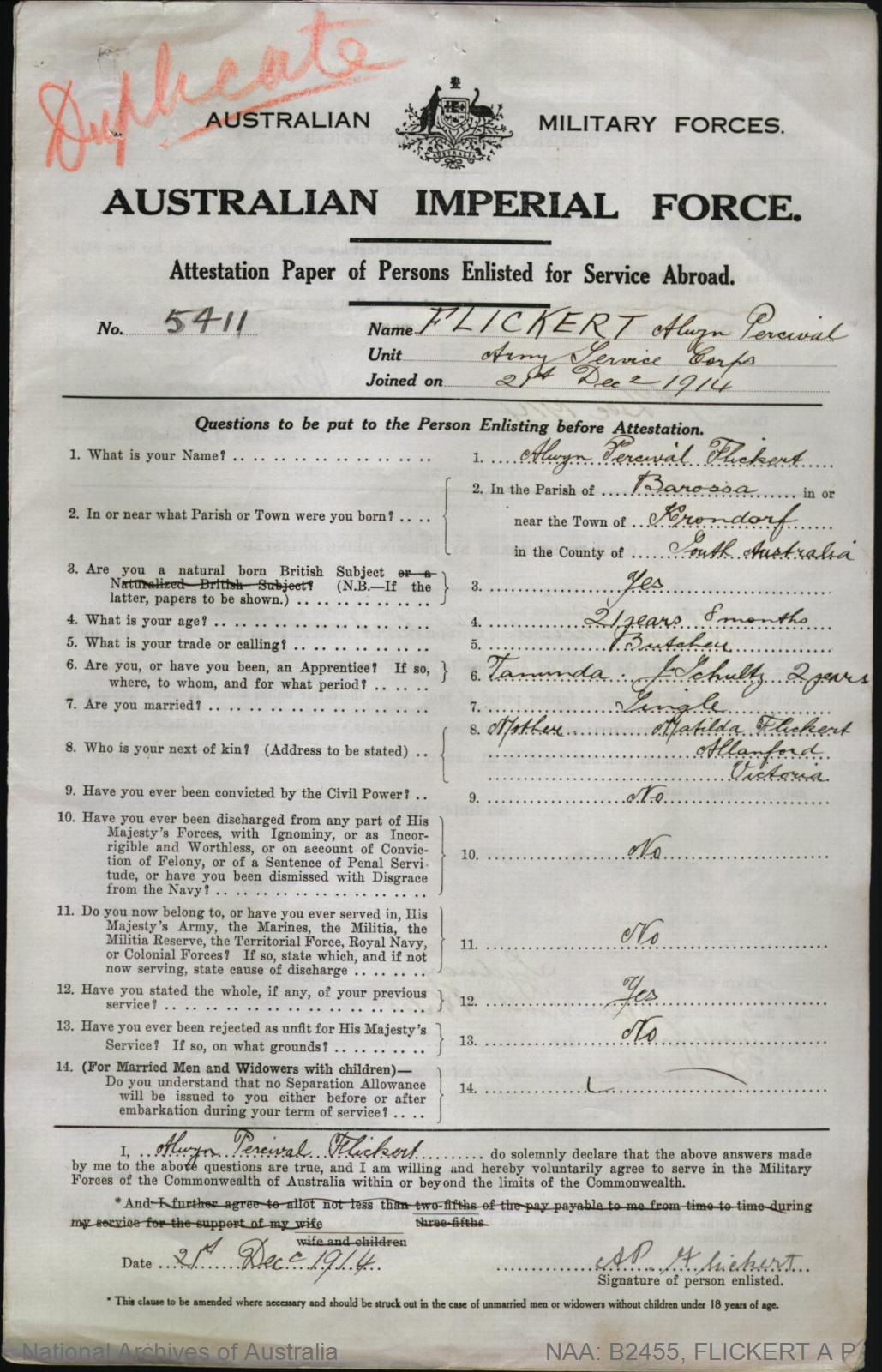
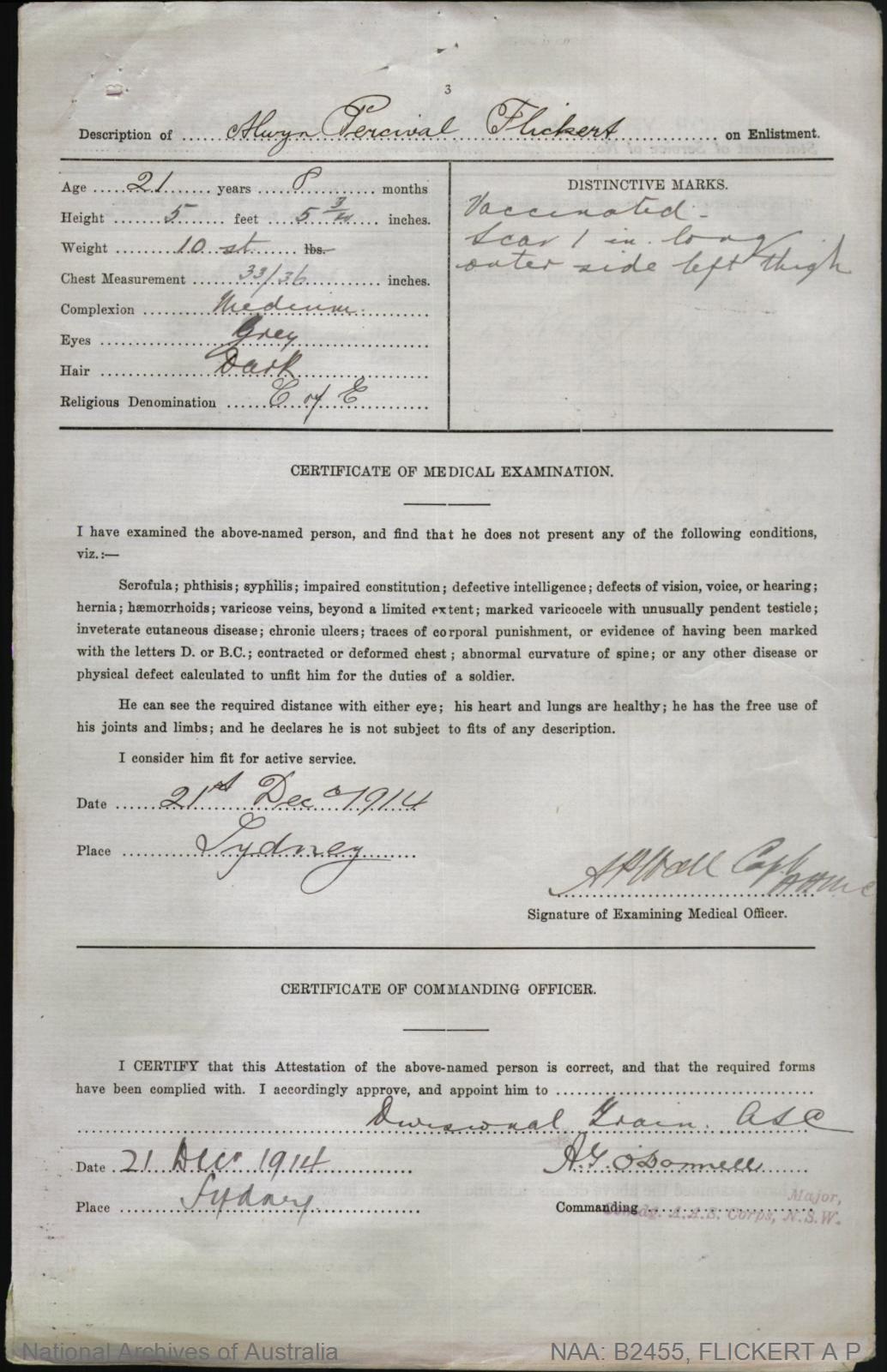
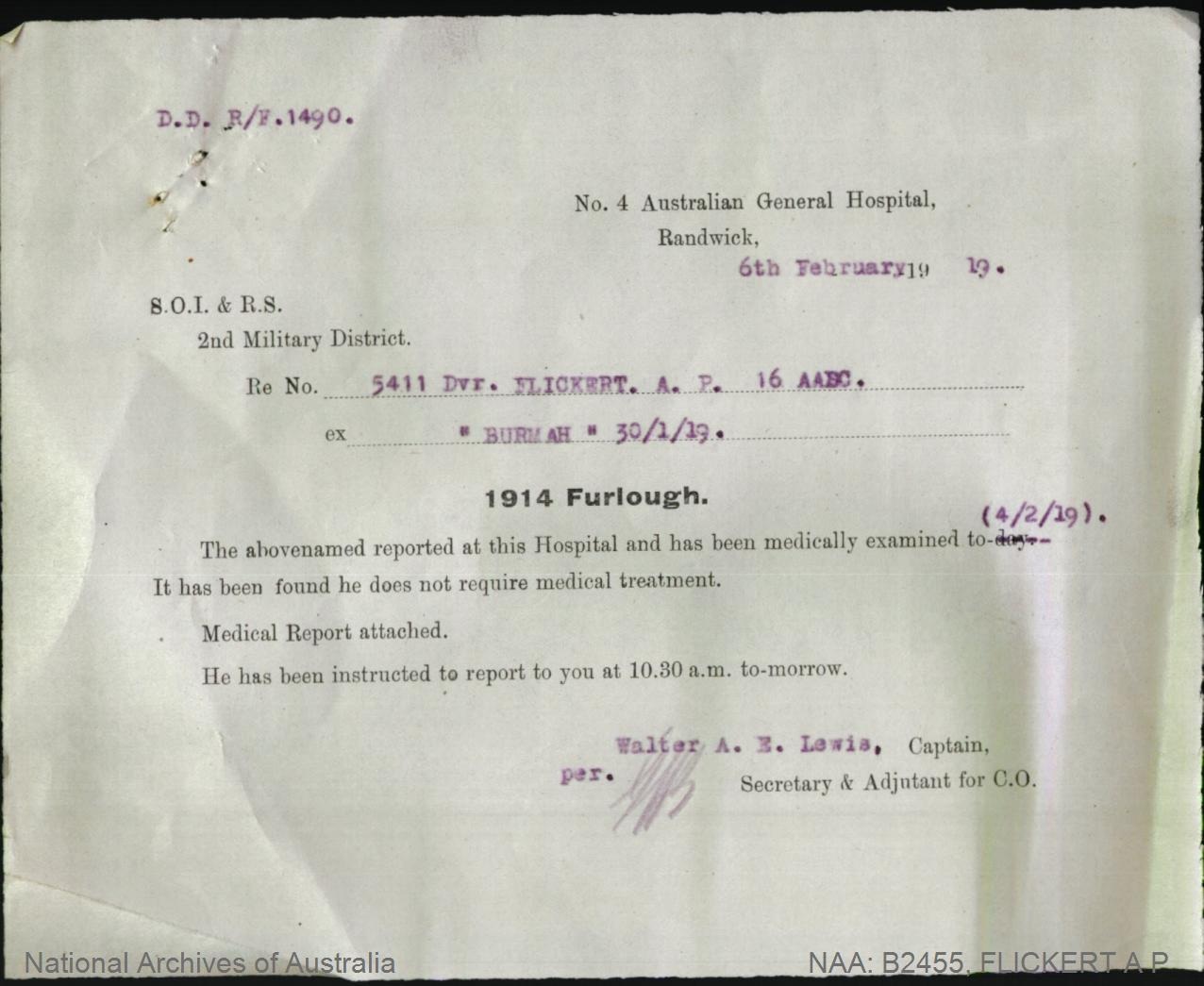
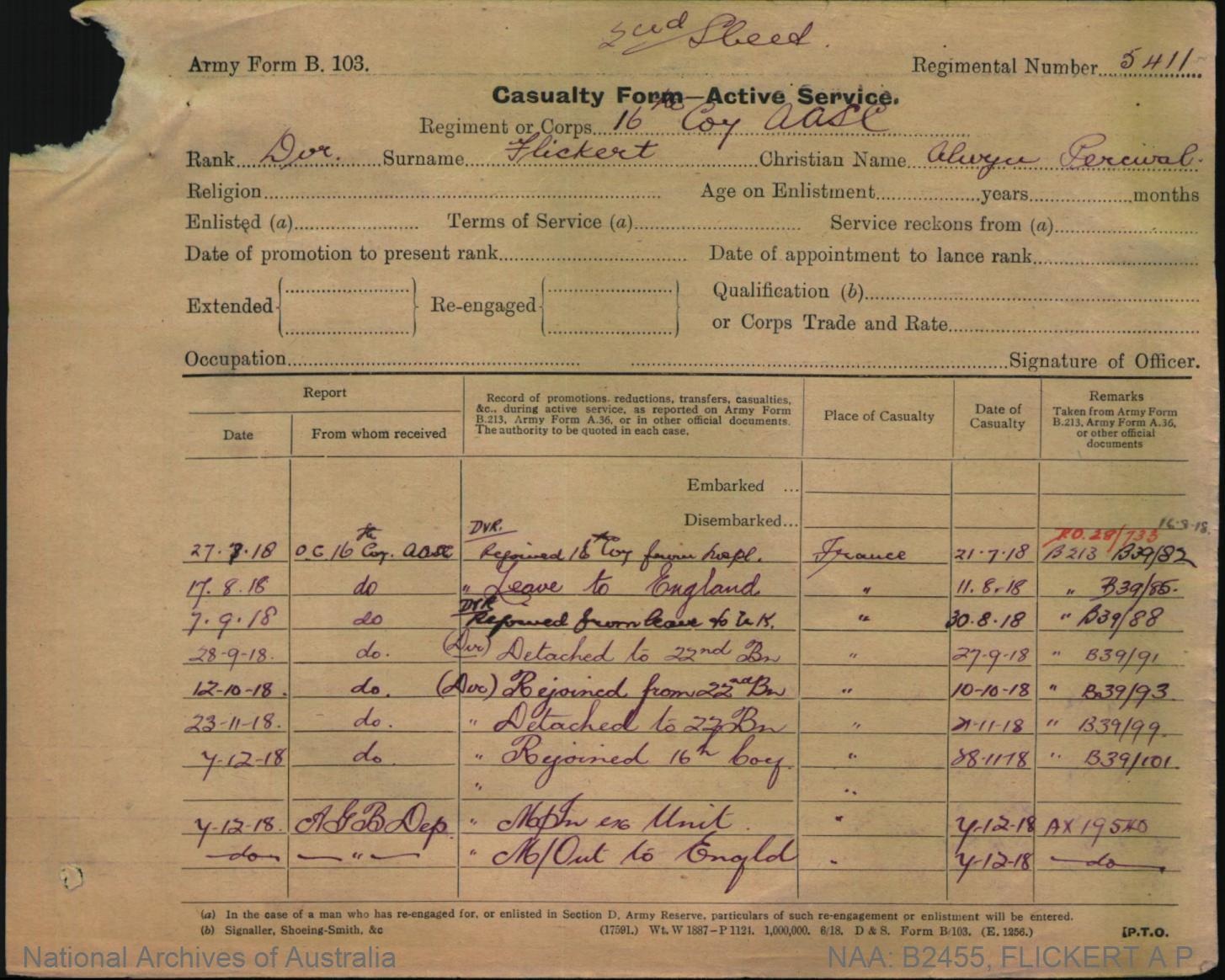
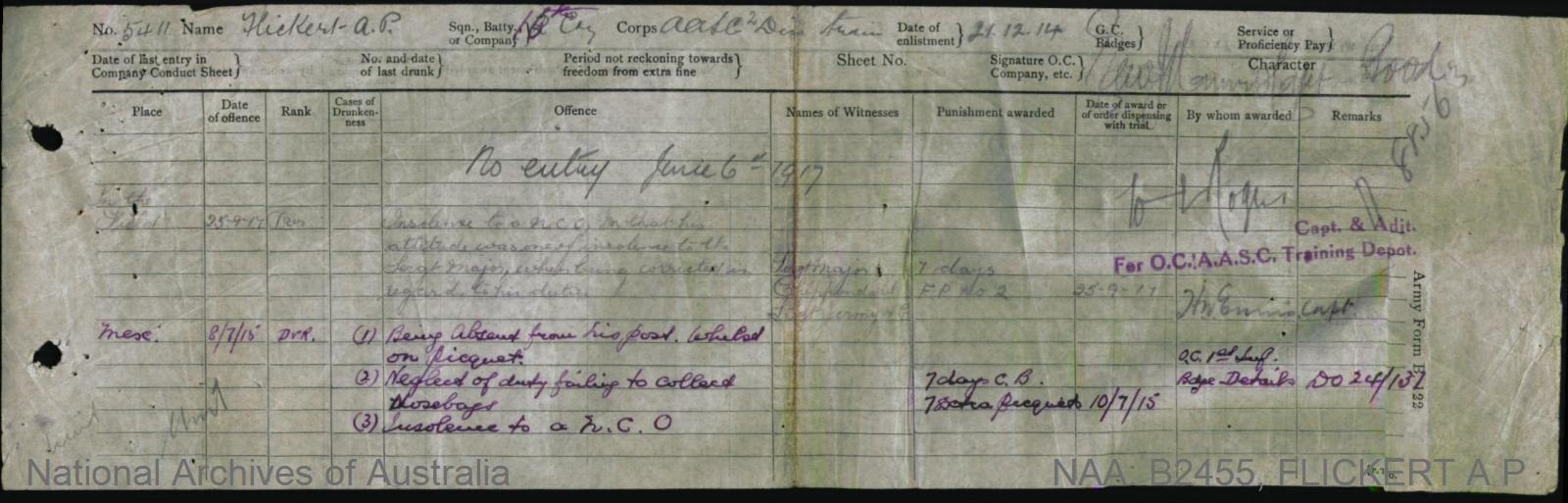
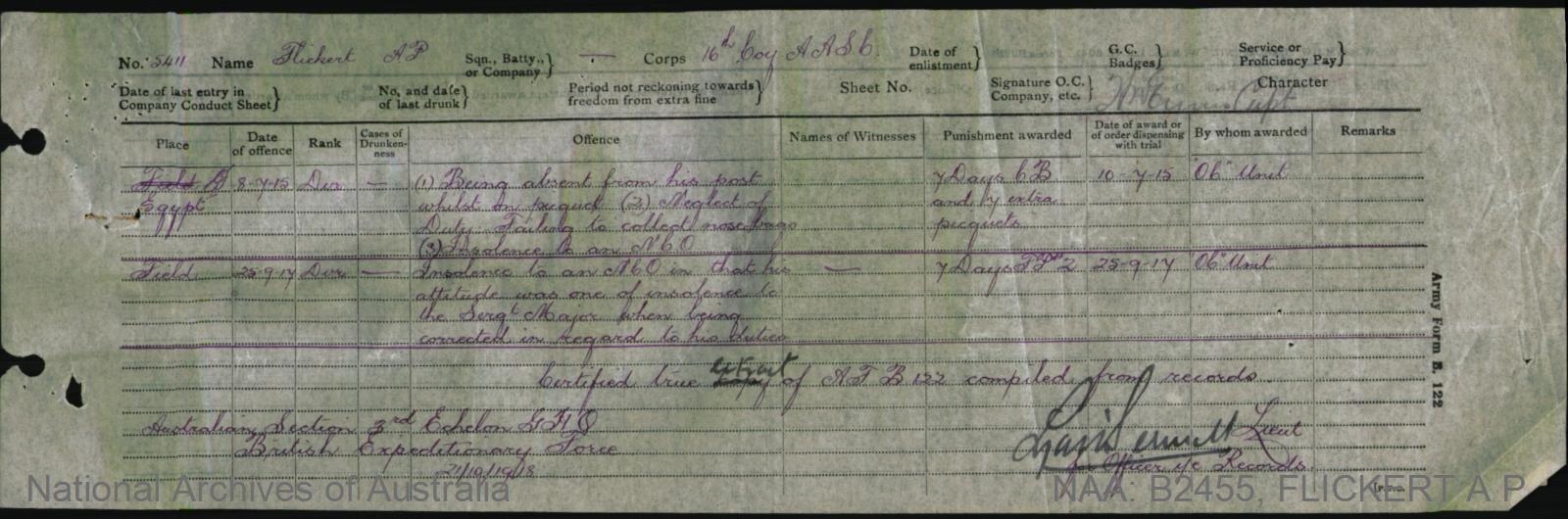
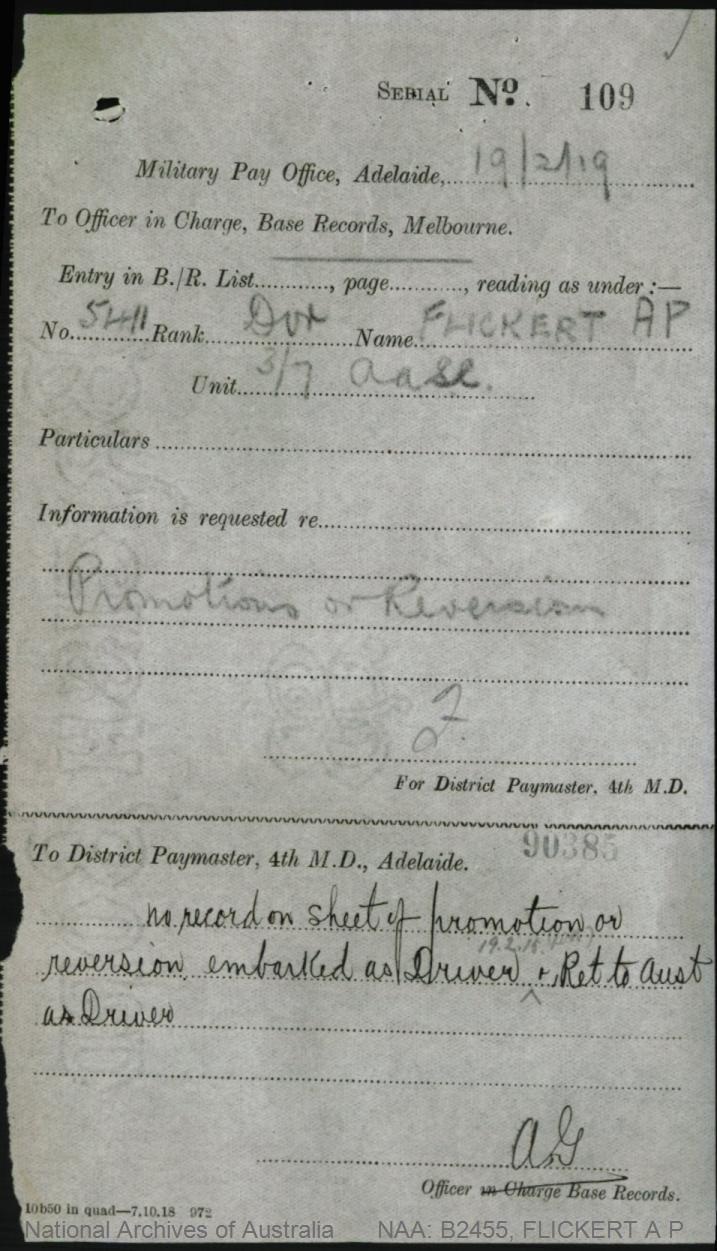
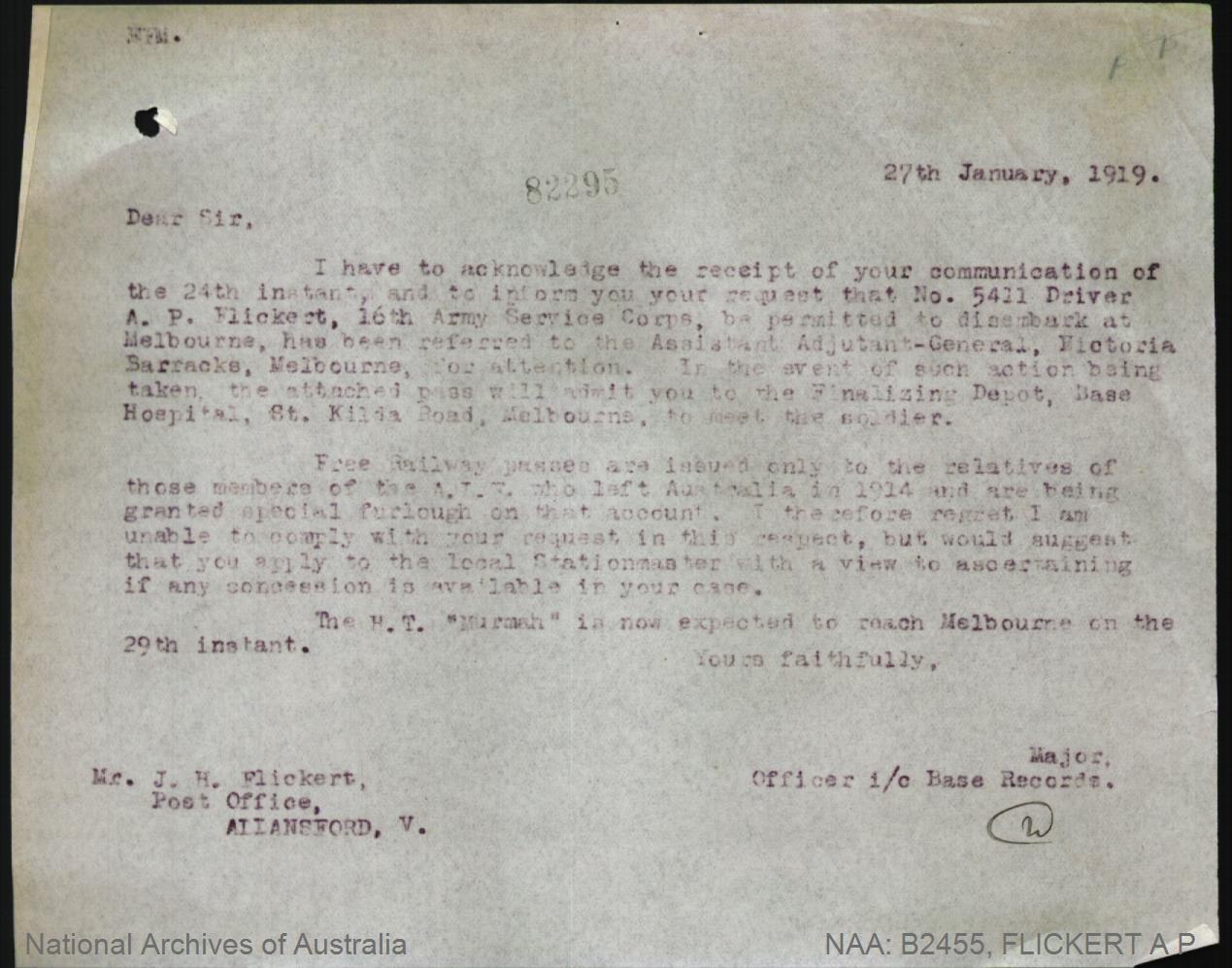
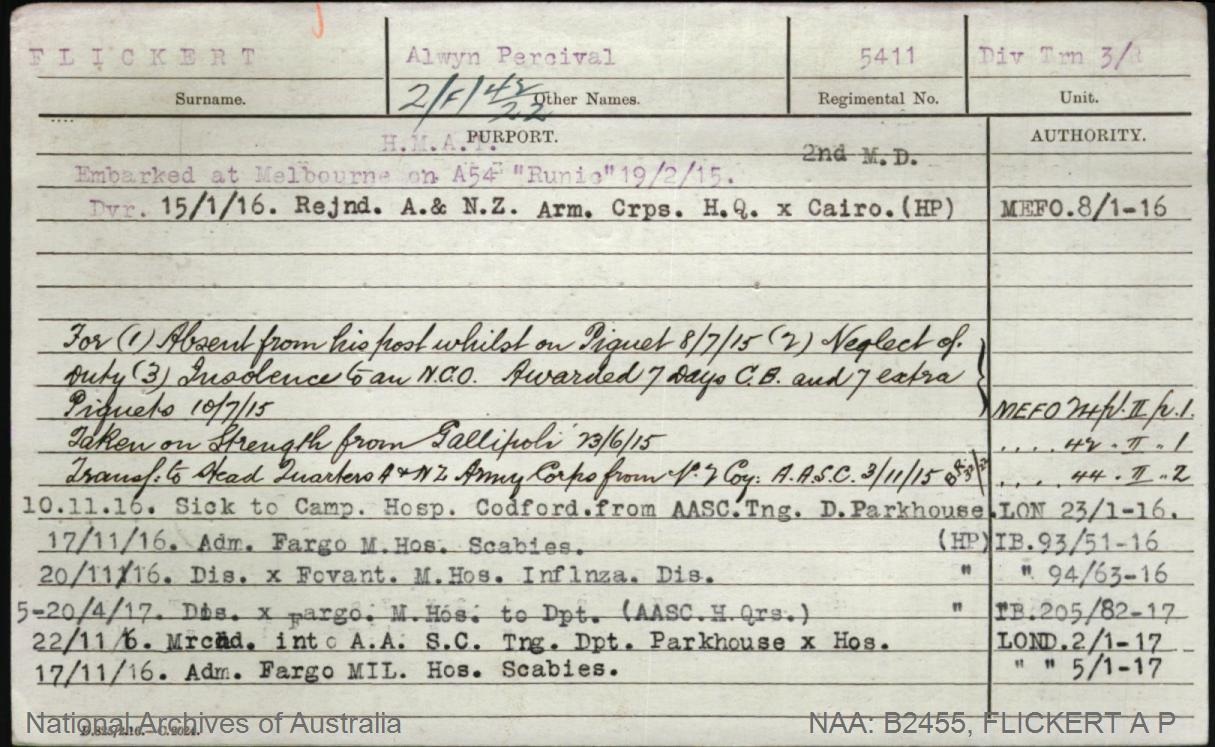
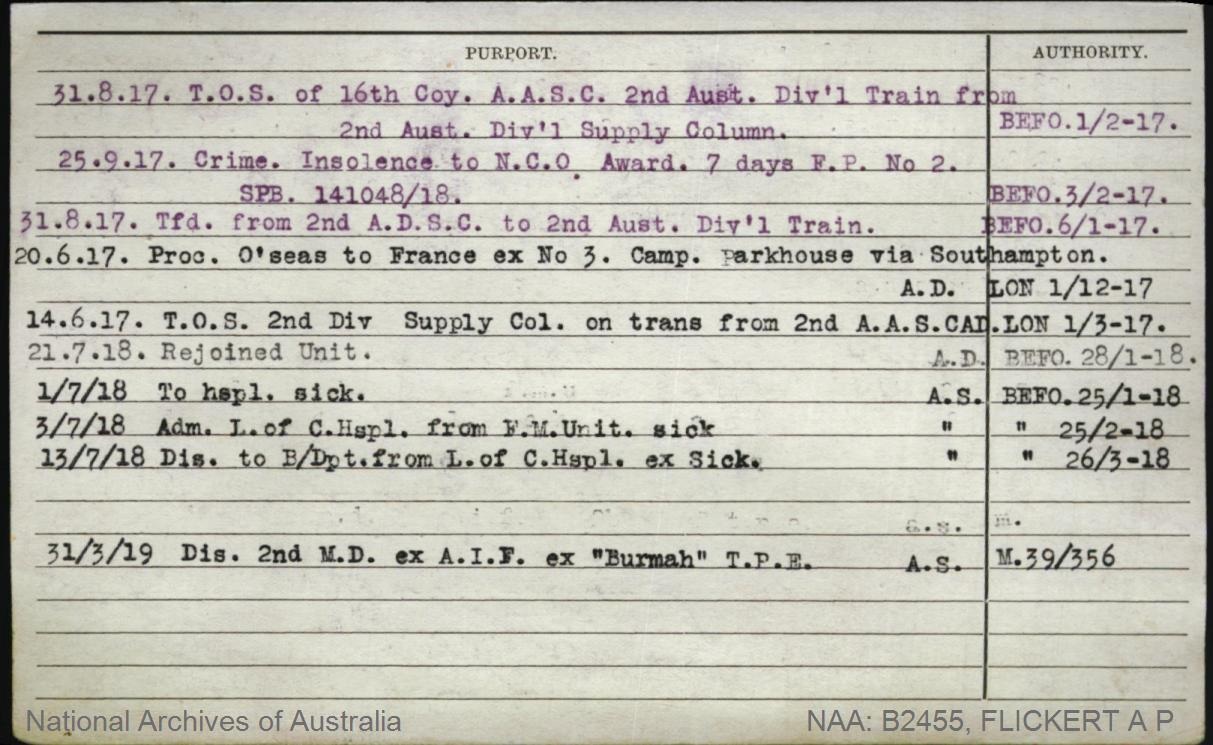
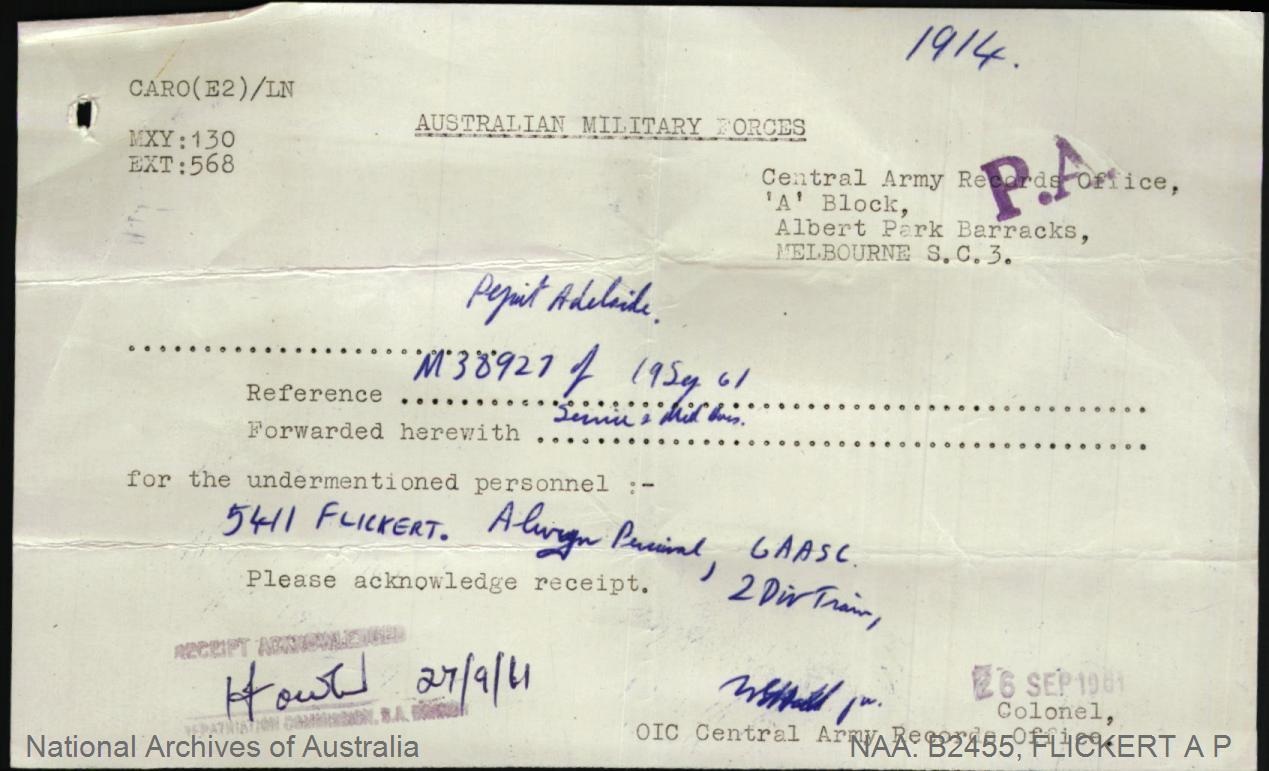
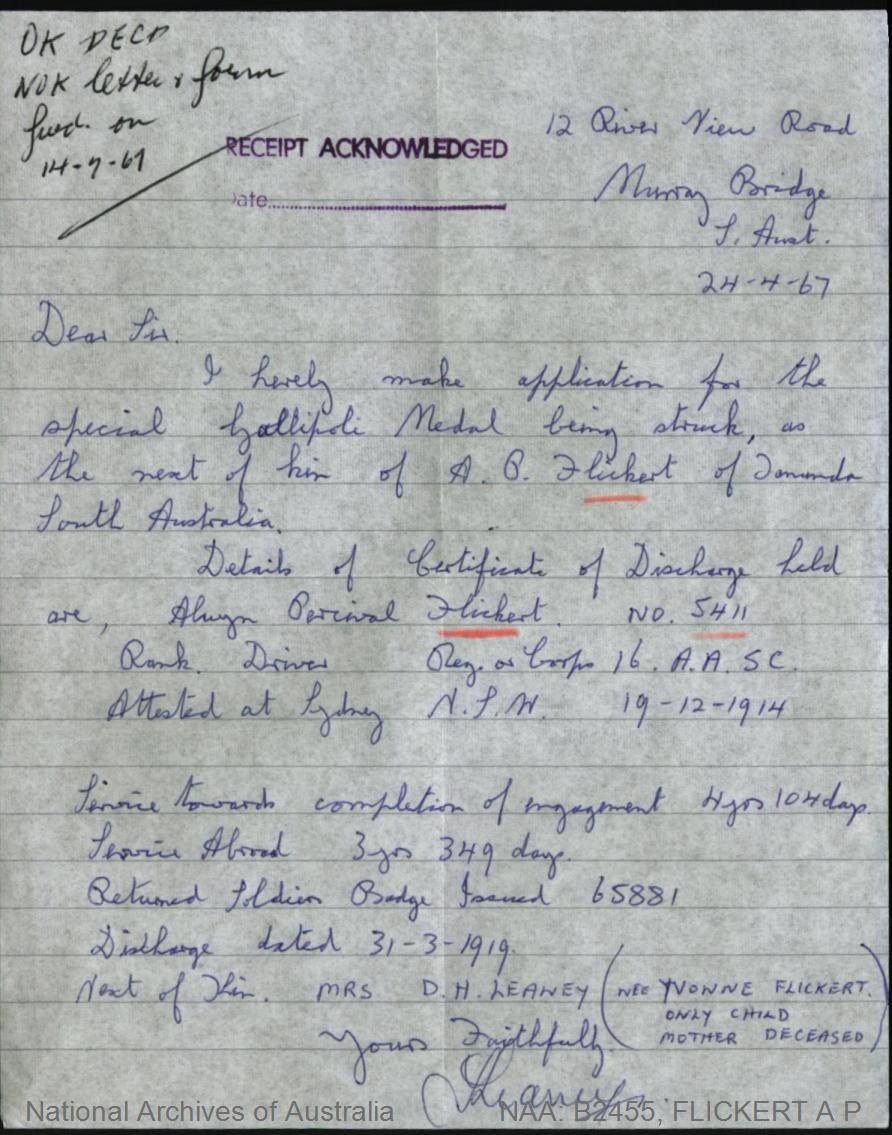
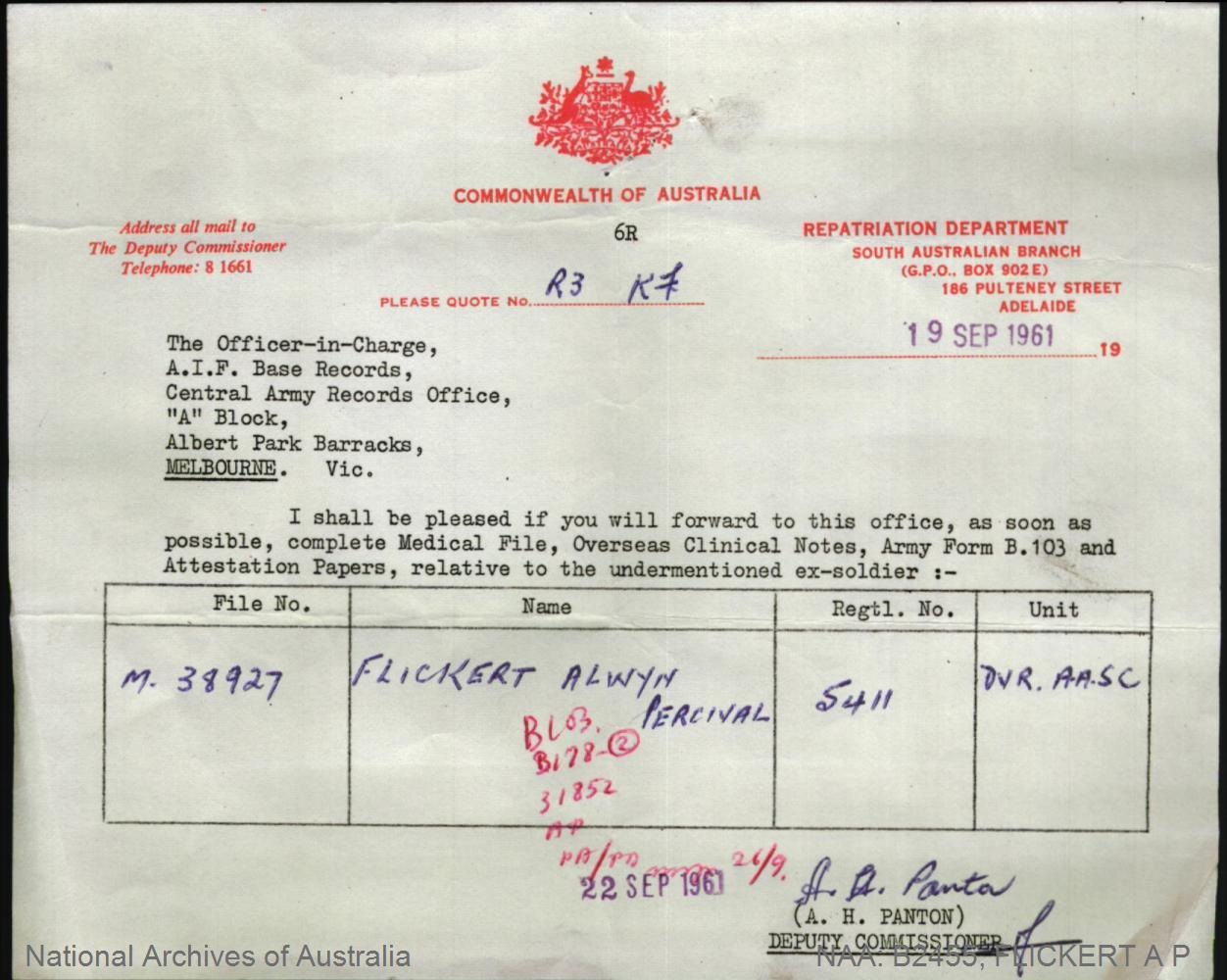
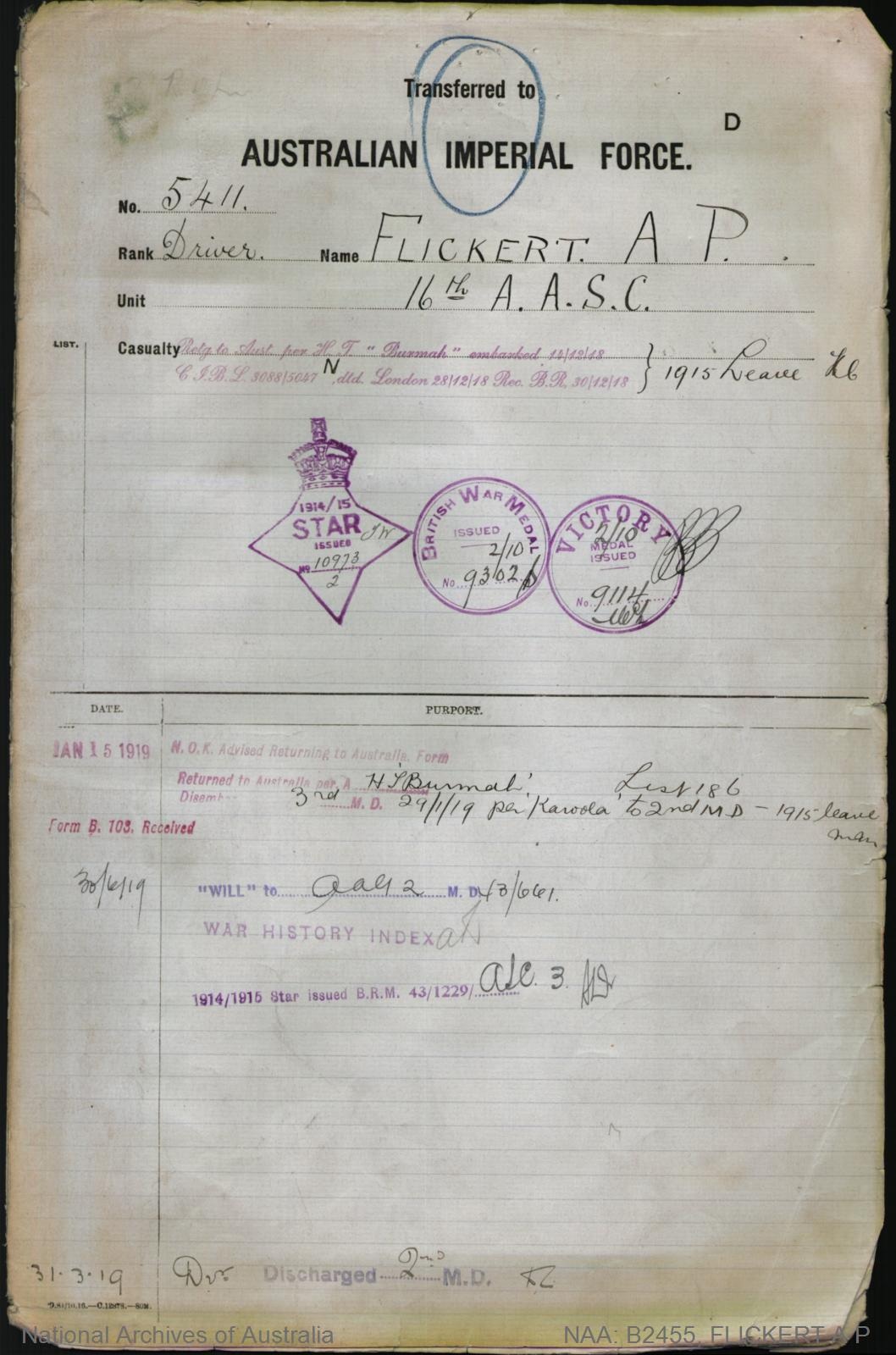
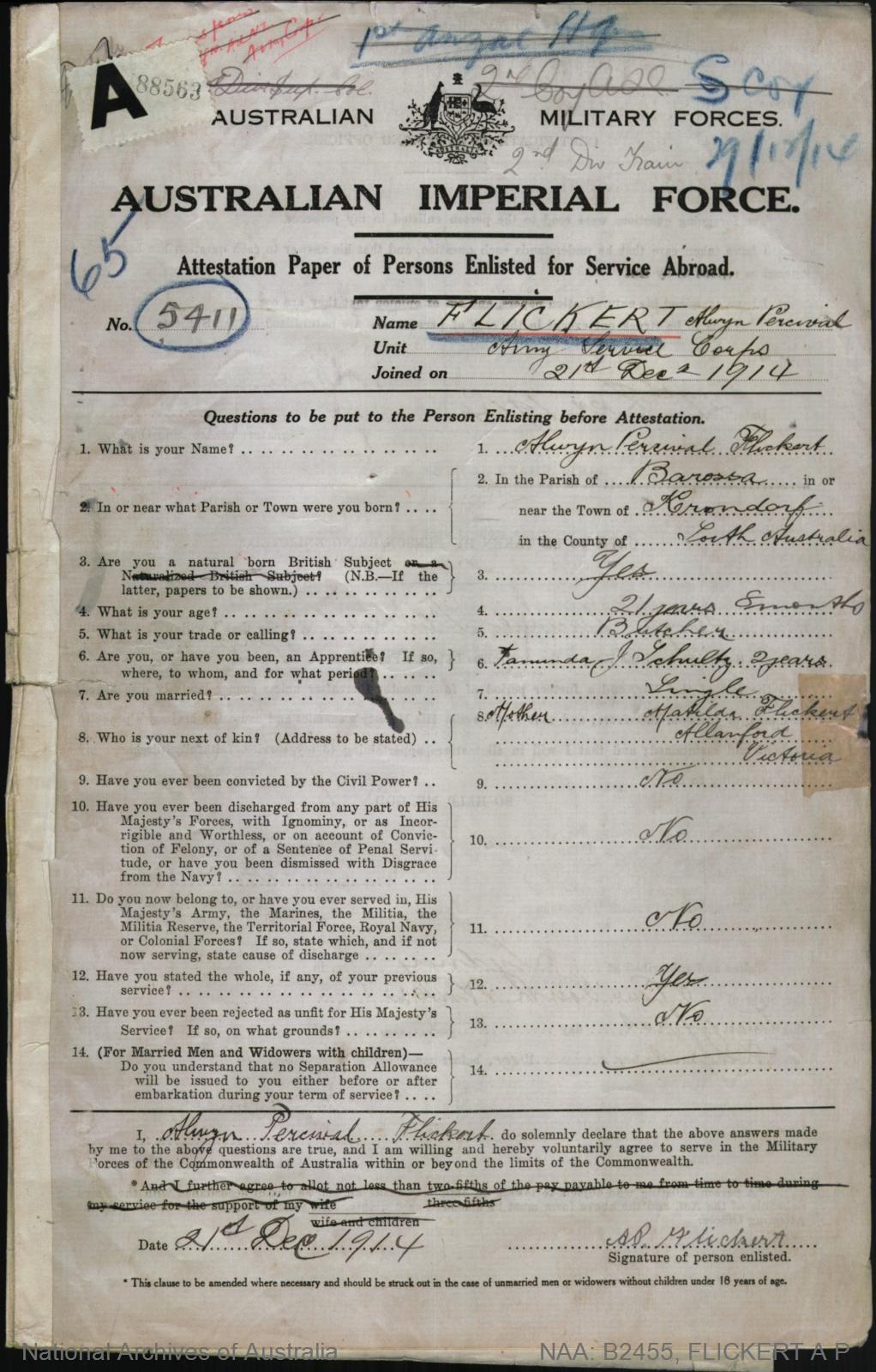
Upon enlistment, Flickert entered a state training depot where he received the foundation of military life. His early training included:
This phase transformed him from civilian to soldier and prepared him for overseas service.
2. Embarkation & Voyage Training
During the sea voyage to Egypt, Flickert continued daily training:
Physical exercises and rifle cleaning
Lifeboat and emergency drills
Marching practice on deck
Lectures on discipline, field conduct, and military expectations
The voyage also helped reinforce routine and cohesion within his transport unit.
3. Egypt Training Phase (late1915–1916)
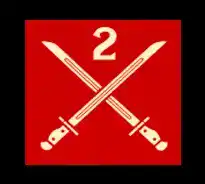
On arrival in Egypt, Flickert joined the reinforcement and consolidation training that shaped the newly formed 2nd Division.
Training at camps such as Zeitoun, Heliopolis, or Tel‑el‑Kebir typically included:
Long desert route marches
Entrenching and field engineering
Bayonet fighting and musketry refreshers
Gas mask drills (introduced early 1916)
Night manoeuvres and extended field exercises
Driver duties in Egypt
For drivers of the AASC, this period was essential:
Managing horse teams in desert conditions
Water cart and supply wagon operations
Convoy movement and coordination
Learning to operate under heat, dust, and long distances
This phase prepared him for the far harsher conditions to come.
4. Formation & Divisional Training
As the 2nd Division reached full strength, training shifted to large‑scale coordination:
Battalion, brigade, and divisional manoeuvres
Artillery–infantry cooperation
Signals and communication drills
Supply‑line organisation and rapid deployment
Flickert’s role as a Driver placed him at the heart of the Division’s logistical backbone.
5. Arrival in France – Trench Acclimatisation (1916)
The Division’s first sector in France was Armentières, known as “The Nursery,” where new troops learned the realities of trench warfare.
Training and familiarisation included:
Trench rotation routines
Gas alarm procedures
Wiring and trench maintenance
Night patrols and working parties
Dugout construction and shelter management
Driver responsibilities
Flickert’s duties intensified:
Night‑time supply runs under blackout
Navigating narrow, muddy roads
Operating wagons under artillery fire
Maintaining horses in cold, wet conditions
This was the beginning of the relentless supply work that kept the Division fighting.
6. Western Front Training Cycles (1916–1918)
Between major battles, the Division rotated through frontline → support → reserve → rest. Each phase included ongoing training:
Driver training & duties
Throughout these cycles, Pickert continued:
Ammunition and ration transport
Forward supply under fire
Convoy coordination
Horse care in winter mud and snow
Later exposure to early motor transport (1917–1918)
Drivers were essential to every operation — without them, the Division could not fight.
7. Pre‑Battle Rehearsals (Major Actions 1916-1918)
Before major actions such as Pozières, Bullecourt, Menin Road, Broodseinde, and Villers‑Bretonneux, the Division conducted:
Full‑scale mock attacks
Tape‑line rehearsals marking trench layouts
Coordination with artillery and, later, tanks
Timing drills for creeping barrages
Flickert’s role ensured ammunition, rations, and engineering materials reached the front lines at the right moment.